
Haplogroup O-CTS7620
What is Paternal Haplogroup O-CTS7620?
Haplogroup O-CTS7620 is a group of Y-chromosome lineages defined by unique genetic markers. Your paternal haplogroup, or that of your father if you do not have a Y-chromosome, sheds light on the migrations of your ancestors. Although your paternal haplogroup reflects just one of your many ancestral lineages, it carries information about that lineage over tens of thousands of years.
Haplogroup O-CTS7620 is descended from haplogroup O-CTS723. Among 23andMe research participants, haplogroup O-CTS7620 is commonly found among populations in South Korea and Japan.
It's important to note that your haplogroup doesn't define your current ethnic identity; rather, it provides an insight into your deep ancestry on the paternal side.
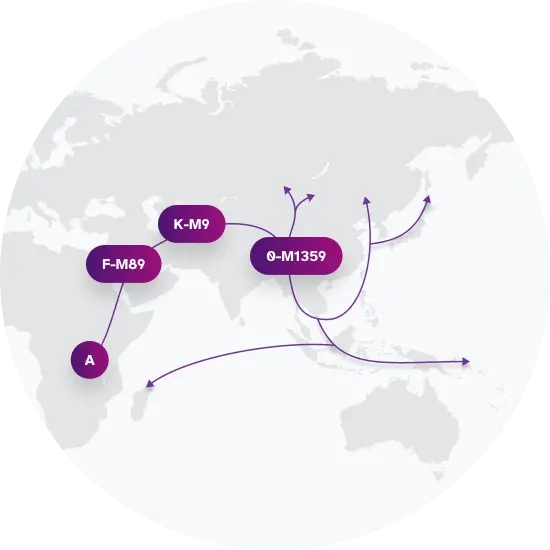 Paternal Haplogroup Origins O-CTS723
Top Surnames with Haplogroup O-CTS7620
For surnames with sufficient representation in the data, these percentages represent the frequency with which each surname is found in individuals exhibiting this genetic marker.
Haplogroup O-CTS7620 is linked to the Yayoi
Haplogroup O1b2a, a branch of haplogroup O, is closely related to several haplogroups that are commonly found in Japan. Haplogroup O is closely associated with Kyushu, Japan's third largest island, and makes up over half of all men in Japan. Although haplogroup O is prevalent in Japan, it likely only entered Japan during the Yayoi expansion about 2,300 years ago. During the Yayoi expansion, people entering from the Korean Peninsula brought wet rice agriculture, weaving technology, and metalworking technology to Japan. The Yayoi expansion began on the island of Kyushu, where haplogroup O is very common today. It is possible that some of the early members of O1-F3356 were involved in this major shift, which quickly and dramatically altered Japanese culture.