
Haplogroup Q-M378
What is Paternal Haplogroup Q-M378?
Haplogroup Q-M378 is a group of Y-chromosome lineages defined by unique genetic markers. Your paternal haplogroup, or that of your father if you do not have a Y-chromosome, sheds light on the migrations of your ancestors. Although your paternal haplogroup reflects just one of your many ancestral lineages, it carries information about that lineage over tens of thousands of years.
Haplogroup Q-M378 is descended from haplogroup Q-L275. Among 23andMe research participants, haplogroup Q-M378 is commonly found among populations in Iran and Mexico.
It's important to note that your haplogroup doesn't define your current ethnic identity; rather, it provides an insight into your deep ancestry on the paternal side.
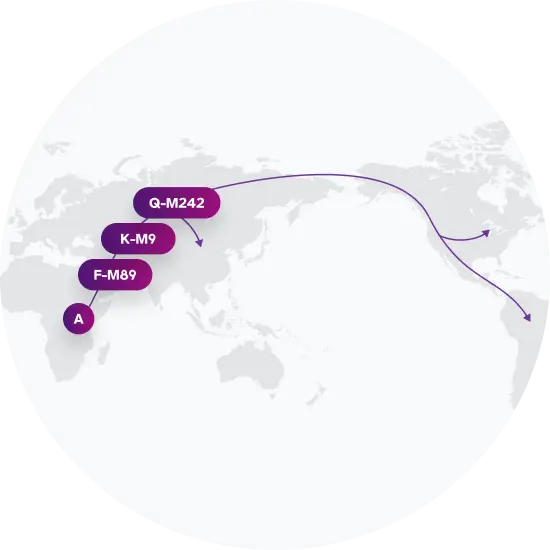 Paternal Haplogroup Origins Q-L275
Top Surnames with Haplogroup Q-M378
For surnames with sufficient representation in the data, these percentages represent the frequency with which each surname is found in individuals exhibiting this genetic marker.
Haplogroup Q-M378 is linked to the Marsh Arabs
One of the populations associated with haplogroup Q1b1 is the Marsh Arab population in the southern part of Mesopotamia. For thousands of years, this region has been a wetland due to its position between the Tigris and Euphrates rivers in modern-day Iraq. Mesopotamia has had human occupants since shortly after they first migrated from Africa 60,000-80,000 years ago. The current inhabitants of Mesopotamia, the Marsh Arabs, have strong ties to the ancient Sumer, one of the world's first civilizations. Like their ancient forebears, Marsh Arab culture includes architecture based on arched reed buildings, subsistence strategies from grazing water buffalo, trapping birds, and spearing fish to cultivating rice, and the use of skinny boats called "Tarada" for transportation.